How much does roof replacement cost in Orange County? For many homeowners, the realistic answer is anywhere from roughly $12,000 to $50,000 or more, depending on the roof’s size, material, condition, design, and access. A straightforward asphalt shingle replacement may fall toward the lower end of that range. A large tile, metal, low-slope, or highly complex roof can require a substantially larger investment.
The number that matters is not a quick square-foot price pulled from a generic calculator. A dependable replacement estimate accounts for what is visible from the ground and what can only be confirmed after a professional inspection. It should define the work clearly, identify likely variables, and help you plan for a roof that protects the home for the long term.
Typical Roof Replacement Costs in Orange County
Orange County homes vary widely, from compact single-story ranch properties to hillside homes, coastal residences, multifamily buildings, and newer construction with intricate rooflines. That range makes a single price misleading. Still, these broad planning ranges can help set expectations for a full residential roof replacement:
- Asphalt shingle roofs often range from about $12,000 to $25,000 for a typical home, with premium shingles, steep slopes, and added repairs increasing the total.
- Concrete or clay tile roof replacements commonly start around $20,000 and can exceed $45,000, especially when the roof is large, complex, or requires underlayment and wood repairs.
- Metal roofing may range from approximately $25,000 to $55,000 or more, depending on the panel system, detailing, roof geometry, and substrate condition.
- Flat or low-slope roofing systems can range broadly, often from $15,000 to $35,000 or more, based on drainage conditions, insulation needs, penetrations, and membrane selection.
These are planning figures, not fixed quotes. Two neighboring homes with similar living areas can have very different roofing costs because roof area, pitch, material weight, and detailing are not the same.
What Drives Roof Replacement Pricing?
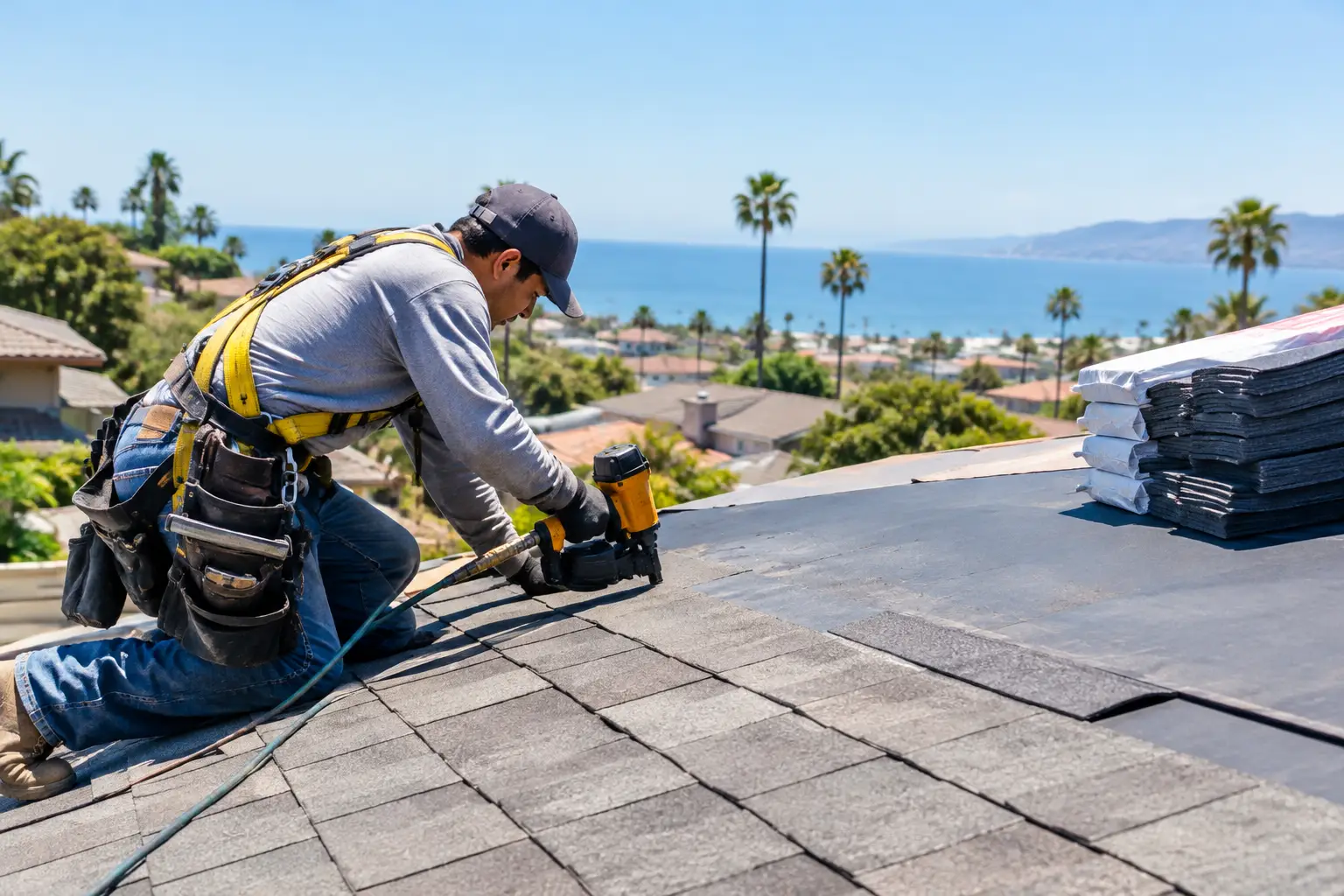
A roof replacement is more than installing a new outer layer. The full scope can include removal of existing materials, protection of the property, deck inspection, repairs where needed, installation of underlayment and flashing, ventilation work, new roofing material, cleanup, and final inspection coordination. Each part affects the total.
Roof size and shape
Roofing is measured by actual roof surface, not simply the home’s interior square footage. A 2,000-square-foot home with a steep roof, multiple gables, dormers, valleys, and extended eaves may have far more roofing area than a larger single-story home with a simple layout.
Complex rooflines also require more labor and more material cuts. Valleys, ridges, chimneys, skylights, wall transitions, vents, and solar equipment all create details that must be handled correctly. Those details are where quality workmanship matters most because they are common locations for future water intrusion when installation is rushed or incomplete.
Roofing material and system design
Material selection has a major impact on the initial price, appearance, maintenance needs, and expected service life. Asphalt shingles remain a practical choice for many properties because they offer dependable performance at a relatively accessible price point. Tile can complement many Southern California architectural styles, but it requires careful attention to underlayment, flashing, loading, and the condition of the roof structure.
Metal roofing can deliver a clean, durable finish, but its cost reflects specialized materials and installation details. Low-slope systems require a different approach entirely, with membrane seams, drainage, edge metal, and penetrations demanding precise execution. The best option depends on the home, budget, local conditions, and the owner’s priorities, not simply the material with the lowest upfront cost.
Tear-off, disposal, and existing layers
Removing an old roof takes labor, planning, and responsible disposal. A roof with multiple existing layers, heavy tile, deteriorated materials, or difficult debris access will generally cost more to remove than a simple single-layer shingle roof.
Tear-off also gives the contractor a clearer view of the roof deck and underlying conditions. Covering an existing roof may appear less expensive at first, but it can leave concealed issues unaddressed and may not be appropriate for every property or roofing system. A professional evaluation should determine the right approach for the building.
Roof deck and wood repairs
Water damage is not always visible until the old roofing is removed. Damaged plywood, fascia, rafter tails, or other wood components may need repair before new materials are installed. This work protects the integrity of the new roof, but it can add to the final contract amount if concealed conditions are discovered.
A responsible estimate should explain how potential wood repairs will be documented and priced. Homeowners should be cautious about quotes that ignore the possibility of substrate issues or offer a low number without clarifying what happens if repairs are needed.
Access, safety, and site conditions
A roof with easy driveway access and open working space is different from a property on a narrow street, a steep hillside lot, or a home with limited side-yard clearance. Material delivery, debris loading, equipment placement, and crew safety all affect labor requirements.
Landscaping, hardscape, pools, solar panels, fragile exterior finishes, and neighboring structures also require protection and coordination. These are not minor details. A properly managed project plans for them before materials arrive, helping reduce avoidable delays and property damage.
Permits, Inspections, and Local Requirements
Roofing requirements can vary by city, neighborhood, and property type. Depending on the scope, permits and inspections may be required, and some homes may have additional design or association considerations. Ventilation, fire classification, flashing, energy requirements, and material standards can also influence the project scope.
A licensed contractor should verify the applicable requirements for the specific property rather than making broad assumptions. Permit fees are only one part of the equation. Proper coordination and inspection readiness help keep the work aligned with the approved scope and prevent last-minute corrections that can affect budget and schedule.
Why the Lowest Bid Can Cost More Later
Roof replacement is a major construction project, and an unusually low bid often leaves out something essential. It may exclude tear-off, disposal, underlayment upgrades, flashing, permit coordination, deck repairs, ventilation, or warranty details. In some cases, the scope is simply too vague to compare fairly.
When reviewing proposals, look beyond the total price. Confirm the roofing material and manufacturer, the underlayment system, flashing approach, ventilation plan, tear-off scope, protection measures, cleanup responsibilities, and process for change conditions. Ask whether the contractor is licensed and insured, and make sure the proposal identifies what is included and what may be additional.
A clear scope gives homeowners a better basis for comparison. It also creates accountability once work begins. The goal is not to choose the most expensive proposal. It is to choose the contractor and roofing system that provide a sound, documented solution for the property.
How to Build a More Accurate Budget
Start with an on-site inspection rather than relying only on aerial measurements or an online quote. A qualified roofing contractor can assess roof access, slope, material type, visible damage, drainage, penetrations, and the overall condition of the existing system. That conversation should also cover your goals: Are you preparing to stay in the home for decades, addressing recurring leaks, coordinating a solar project, or replacing a roof as part of a larger remodel or addition?
It is wise to keep a contingency for concealed conditions, particularly for older homes or roofs with a history of leaks. That does not mean accepting an open-ended budget. It means understanding which items are known, which items are allowances, and how any necessary changes will be approved and documented.
If roofing is part of an addition, ADU, major renovation, or whole-property improvement, coordination becomes even more valuable. Roofing, framing, electrical work, HVAC penetrations, drainage, and exterior finishes should be planned together instead of treated as disconnected tasks. This helps protect the finished work and supports a cleaner project sequence.
Get a Roof Replacement Estimate Built Around Your Home
The right roof replacement investment starts with a detailed scope, not a one-size-fits-all number. A professional inspection can identify the system that fits your property, clarify potential cost drivers, and establish a practical path from removal through final completion.
For Orange County property owners, RD Fast Construction approaches roofing with the same disciplined project management used for major residential construction: clear communication, quality materials, jobsite protection, and workmanship that respects the home beneath the roof. A well-planned replacement is not just an expense. It is a chance to protect your property with work built right from the start.