
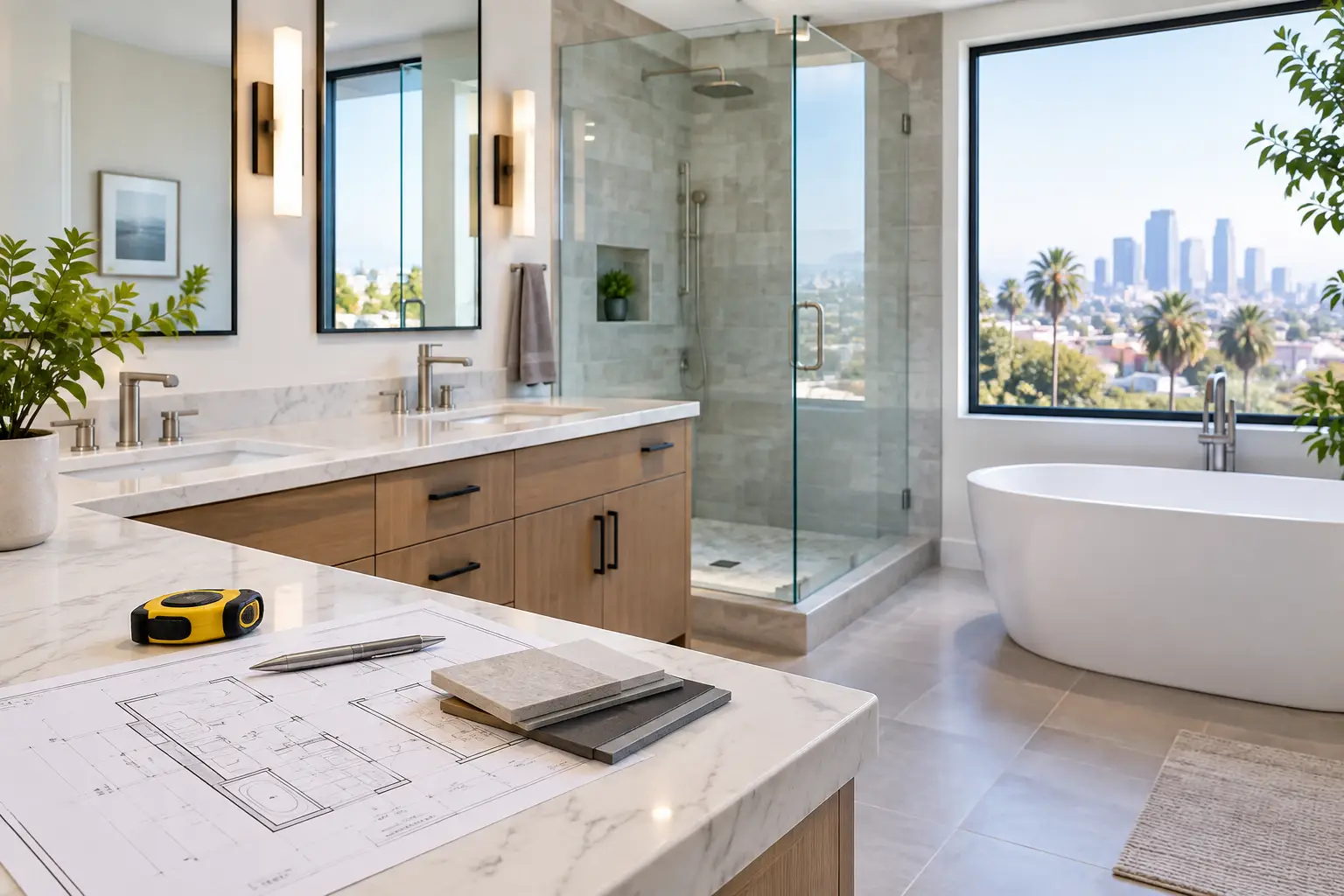
A bathroom can look small on a floor plan, but it is one of the most trade-intensive rooms in a home. Tile setters, plumbers, electricians, waterproofing specialists, cabinet installers, and inspectors may all have a role. That is why bathroom remodel cost Los Angeles homeowners see can vary widely, even between two bathrooms with similar square footage.
For a clear budget, focus less on a single online price and more on the condition of the room, the level of finish you want, and whether the project changes plumbing, electrical, or layout. A dependable contractor should walk the space, identify risks behind the walls, define the scope, and explain what is included before construction begins.
What Does a Bathroom Remodel Cost in Los Angeles?
Most Los Angeles bathroom renovations fall into a few practical investment ranges. A cosmetic refresh may run from roughly $15,000 to $30,000. This can include a new vanity, lighting, fixtures, paint, flooring, a toilet, and targeted tile work while keeping the existing layout and major systems in place.
A mid-range full bathroom remodel commonly falls between $30,000 and $60,000. At this level, homeowners often replace the shower or tub, tile more of the room, install a better vanity and countertop, update electrical, improve ventilation, and complete proper waterproofing behind new finishes.
A high-end primary bathroom renovation can range from $60,000 to $120,000 or more. Custom cabinetry, natural stone, frameless glass, curbless showers, premium fixtures, heated floors, specialty lighting, and significant layout changes all move a project into this category. If walls need to move, structural work is required, or the home has major plumbing and electrical deficiencies, the total can exceed these figures.
These are planning ranges, not substitutes for a site-specific proposal. A 1960s home with original galvanized plumbing presents a different construction path than a newer condo with accessible mechanical systems. Building access, parking, HOA requirements, and the location of the bathroom within the home can also affect labor and scheduling.
The Biggest Drivers of Bathroom Remodel Cost Los Angeles Homeowners Should Know
Layout changes are expensive for a reason
Keeping the toilet, shower, and vanity in their current locations is usually the most effective way to control costs. Moving them may require new drain lines, water lines, venting, electrical work, wall repair, and sometimes slab or subfloor access. The finished room may look simple, but the work underneath is substantial.
A layout change can still be worthwhile when it solves a real problem. For example, replacing an undersized tub with a larger walk-in shower may improve daily use, accessibility, and resale appeal. The key is to price the change early rather than treating it as a mid-project decision.
Waterproofing is not a place to cut corners
A beautiful tile shower fails quickly if water reaches the framing or subfloor. Professional waterproofing requires proper substrate preparation, approved membranes or systems, careful drain integration, and testing before tile is installed. This work is largely hidden when the project is complete, which makes it tempting for low bids to reduce or omit it.
In Los Angeles, where many homes have aging construction and previous remodels of unknown quality, opening walls often reveals moisture damage, mold, deteriorated framing, or outdated plumbing. Allowing a reasonable contingency for concealed conditions protects the project from unnecessary surprises.
Materials create a wide range of outcomes
A room can be remodeled with durable, attractive materials at several price points. Porcelain tile generally offers strong performance and broad design options, while handmade tile, large-format slabs, natural stone, and intricate mosaic installations require more material and skilled labor. The same is true for fixtures. A standard vanity and a custom-built walnut vanity serve a similar function, but they do not carry the same cost or lead time.
It helps to decide where the room should make its strongest visual statement. Some homeowners invest in a high-quality shower system and use practical porcelain tile. Others choose a custom vanity and simplify the wall finishes. A focused material strategy often delivers a more polished result than selecting premium finishes in every category without a defined budget.
Electrical, ventilation, and code compliance matter
Modern bathrooms need more than a single overhead light. A well-planned remodel may include vanity lighting, shower-rated lighting, GFCI-protected outlets, dedicated circuits for heated floors or bidet seats, and an appropriately sized exhaust fan. These upgrades improve comfort and safety, but they require coordinated electrical work.
Permits and inspections may be required when a remodel includes plumbing, electrical, mechanical, or structural changes. Requirements depend on the scope and the property jurisdiction. A licensed contractor can coordinate permit-oriented planning, schedule inspections, and make sure the work progresses with compliance in mind. That process adds cost, but it also protects the property and helps avoid expensive corrections later.
Build a Budget Around the Scope, Not Just the Finish Level
Before selecting tile or fixtures, identify what must happen behind the walls. An accurate construction scope should address demolition, debris removal, framing repairs if needed, plumbing, electrical, waterproofing, wallboard, tile installation, painting, cabinetry, countertops, fixtures, glass, permits, and final cleanup. If a proposal is vague about these items, the initial number may not reflect the full project.
Homeowners should also separate construction cost from owner-selected materials when reviewing estimates. Some contractors provide an allowance for tile, fixtures, cabinetry, or lighting. Allowances are useful, but they should be realistic for the products you intend to buy. Selecting materials above the allowance is not necessarily a problem, as long as the difference is visible and approved before ordering.
For most projects, it is wise to reserve a contingency of about 10% to 20% for conditions that cannot be confirmed until demolition. Homes with prior water damage, older plumbing, or limited records may warrant the higher end of that range. A contingency is not a blank check. It is a planned safeguard that should be used only when a documented condition requires additional work.
How to Get a More Reliable Bathroom Remodel Estimate
A productive estimate meeting starts with clear priorities. Share how the room is used today, what frustrates you, whether you plan to stay in the home long term, and where you are willing to compromise. A growing family may value a durable tub and extra storage. A homeowner planning to age in place may prioritize a low-threshold shower, grab-bar blocking, and better lighting. An investor may focus on durable finishes and a schedule that supports a rental turnover.
Ask the contractor how the project will be managed from demolition through closeout. You should understand who coordinates trades, how material deliveries are handled, how the work area is protected, when inspections occur, and how changes are documented. A low price has limited value if the job stalls because no one owns the schedule or communicates clearly when an issue is found.
At RD Fast Construction, the goal is to provide that ownership from planning through final turnover. A defined scope, experienced crews, active schedule coordination, and transparent communication give homeowners a better basis for making decisions before construction starts.
Where Spending More Usually Pays Off
Not every upgrade adds equal long-term value. Spending on waterproofing, properly installed plumbing valves, ventilation, electrical safety, and durable installation methods is usually money well spent. These are the systems that protect the home and support daily use long after a faucet style or paint color changes.
Quality cabinetry hardware, a well-built vanity, good task lighting, and easy-to-clean shower surfaces also improve how the bathroom performs every day. By contrast, highly specialized finishes can be worthwhile for a custom home, but they may not make sense for every property or every resale strategy. The right decision depends on your home, your timeline, and the role the bathroom plays in your larger property plan.
A successful remodel is not the one with the highest price tag. It is the one that solves the right problems, meets code, holds up to real use, and is built with a scope you can understand. Start with an on-site assessment, make the hidden work visible in the budget, and let the finished bathroom be the reliable part of your home you enjoy every morning.


