
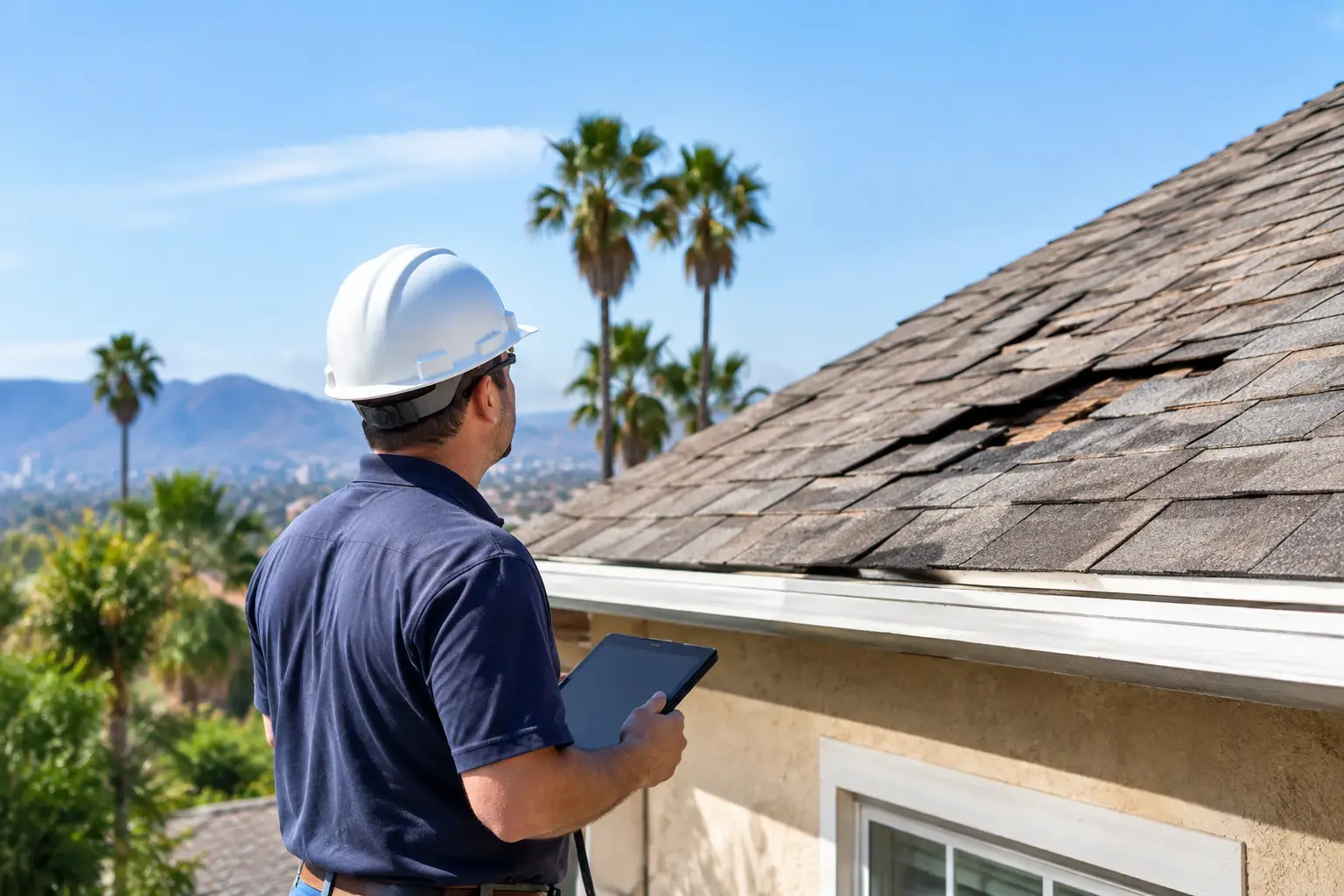
A roof rarely fails all at once. More often, it gives property owners a series of visible warnings: a stain that returns after rain, shingles that no longer lie flat, or a room that feels hotter than it should. Knowing the top signs roof replacement needed can help you act before moisture reaches framing, insulation, ceilings, and interior finishes.
For homes and commercial properties in Los Angeles and Orange County, long periods of intense sun, seasonal rain, wind, and aging materials can all shorten a roof’s useful service life. The right response is not always a full replacement. A qualified contractor should first determine whether the issue is isolated and repairable or whether the roofing system has reached the point where continued patching is no longer a sound investment.
Top Signs Roof Replacement Is Needed
Your roof is near or past its expected service life
Roof age does not tell the entire story, but it is one of the clearest starting points. Asphalt shingle roofs commonly last about 20 to 30 years, depending on material quality, installation, ventilation, weather exposure, and maintenance history. Tile, metal, and other systems may last longer, but their underlayment, flashings, and attachment components can wear out sooner than the visible surface material.
If the roof is approaching the end of its expected lifespan and multiple areas are deteriorating, replacement may be more practical than continuing to fund one repair after another. This is especially true when the property owner cannot verify when the roof was last replaced or whether earlier work was completed to professional standards.
Shingles are curling, cracking, bald, or missing
Shingles should form a consistent, protective surface. Curling edges, cracked tabs, exposed fiberglass matting, and bare areas where granules have worn away all indicate material breakdown. Sun exposure can accelerate this process, leaving shingles brittle and less capable of shedding water.
A few damaged shingles after a wind event may be repairable if matching materials are available and the rest of the roof is in good condition. Widespread deterioration is different. When damage appears across several slopes or large sections, individual repairs can create a patchwork roof without resolving the underlying age-related failure.
Granules are collecting in gutters or at downspouts
Asphalt shingles are coated with mineral granules that help protect the asphalt layer from ultraviolet exposure and add fire resistance. Some loose granules are normal on a new roof, but noticeable accumulation on an older roof deserves attention.
Granule loss often accompanies bald spots, discoloration, and accelerated wear. It does not automatically mean the roof must be replaced that day, but it is a strong reason to schedule a professional assessment. The inspection should consider the condition of the entire roof, not just what has collected in the gutters.
Water stains, damp ceilings, or recurring leaks appear indoors
A roof leak does not always drip directly below the damaged area. Water can travel along decking, framing, pipes, or electrical penetrations before it becomes visible on a ceiling or wall. Brown rings, peeling paint, bubbling drywall, musty odors, and damp insulation are all warning signs that moisture may be entering the building envelope.
One leak around a vent, chimney, or flashing detail may be repairable. Repeated leaks in different areas, or leaks that return after previous repairs, can point to broader roofing failure. Prompt evaluation matters because hidden moisture can damage structural materials and create a much larger restoration scope.
The roof deck looks uneven or sagging
A roof plane should appear straight and consistent. A dip, wave, or sag can indicate problems beneath the outer roofing material, including moisture-damaged decking, framing movement, or excessive loads. This is not a condition to monitor casually or cover with a surface patch.
A licensed contractor should evaluate visible sagging promptly and determine what is causing it. The solution may involve roof replacement along with repairs to damaged decking or structural components. The scope depends on what is found after a thorough inspection, not on appearance alone.
Flashing and roof penetrations are failing
Many roof problems begin at transitions rather than in the field of the roof. Flashing around chimneys, skylights, valleys, walls, vents, and pipe penetrations directs water away from vulnerable openings. Rusted metal, cracked sealant, loose flashing, separated materials, or deteriorated boots can allow water into the structure.
Targeted flashing repairs can be effective when the roof itself is still in solid condition. However, if the roof covering is worn out and several penetrations are failing, replacing the full system may provide a more dependable long-term result. A complete replacement allows the contractor to address underlayment, flashings, ventilation, and drainage details as coordinated components rather than isolated patches.
Repairs are becoming frequent and harder to match
A repair should solve a defined problem. When calls for leak repairs become routine, the roof may be signaling that it has reached the end of its practical service life. Repeated repairs can also become less effective when old materials are brittle, when matching shingles are unavailable, or when previous patchwork has concealed more extensive deterioration.
Property owners should weigh the cost of another repair against the likelihood of future issues, interior damage risk, and the value of installing a complete, properly integrated roofing system. The lower upfront option is not always the lower-cost option over the next several years.
Signs That Need Faster Professional Attention
Some conditions justify a prompt inspection because delaying can increase the extent of damage. These include active interior leaking, sagging roof areas, missing sections of roofing after wind, visible daylight in an attic, and signs of moisture around electrical fixtures.
Avoid walking on a damaged roof or attempting to diagnose concealed conditions from above. Fragile materials, steep slopes, hidden soft spots, and unstable surfaces create real safety risks. A professional inspection can document the condition, identify likely water entry points, and outline whether repair, restoration, or replacement is the appropriate next step.
When Repair May Still Be the Right Choice
Replacement is not automatically the answer just because a roof has one problem. A newer roof with localized storm damage, a single failed pipe boot, or an isolated flashing issue may be a good candidate for repair. The key question is whether the surrounding materials remain sound and whether the repair can integrate properly with the existing system.
A reliable assessment looks beyond the visible symptom. It considers roof age, material condition, ventilation, decking, drainage, prior repairs, and the number of affected areas. For properties planning an addition, ADU, or major renovation, it may also make sense to evaluate roofing needs before construction begins so the new work is coordinated with the existing structure.
What a Professional Roof Replacement Evaluation Should Cover
A thorough evaluation should review the visible roof covering, flashings, valleys, penetrations, drainage pathways, and signs of interior moisture. Where accessible, the contractor should also assess attic conditions, ventilation, insulation moisture, and the roof deck. This helps distinguish a surface issue from a system-wide concern.
If replacement is recommended, ask for a clear scope of work. It should explain the proposed roofing material, tear-off or overlay approach where applicable, underlayment, flashing details, ventilation considerations, damaged decking allowances, site protection, cleanup, and inspection coordination. Clear planning protects the property and helps set accurate expectations before work begins.
RD Fast Construction approaches roof replacement as part of the building’s full protection system, not simply as a new surface layer. The goal is to identify the real condition of the roof, define the right scope, and complete the work with accountable coordination from preparation through final completion.
A roof issue is easiest to manage when it is still a roofing issue. If you have noticed recurring leaks, worn materials, or changes in the roof line, a timely professional inspection can give you a clear path forward before a minor warning becomes a larger construction project.