
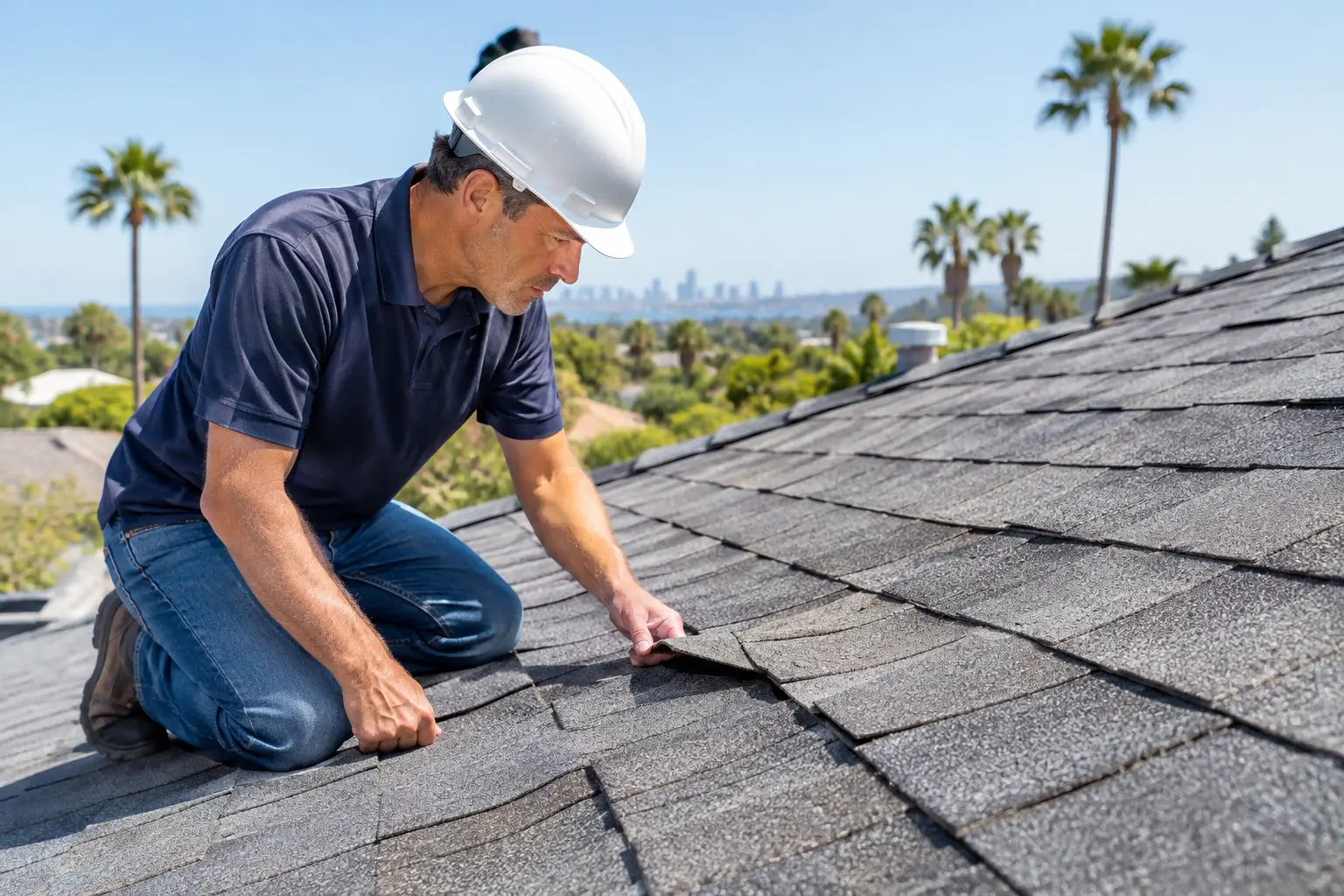
A roof rarely fails on a convenient schedule. It may look acceptable from the street, then reveal a ceiling stain after a hard rain or shed shingles during a wind event. Knowing when to replace an aging roof helps homeowners act before a contained roofing concern becomes water damage in framing, insulation, drywall, or electrical areas.
For properties in Los Angeles and Orange County, roof decisions also need to account for long sun exposure, heat, seasonal rain, coastal conditions in some neighborhoods, and the condition of the home beneath the roof. Age matters, but it is only one part of the decision. The right next step comes from a professional assessment of the entire roofing system.
When to Replace an Aging Roof Instead of Repairing It
A repair can be the smart choice when the issue is isolated and the rest of the roof is in sound condition. A few damaged shingles, a localized flashing concern, or a problem around a roof penetration may be repairable without replacing the whole system.
Replacement becomes the stronger long-term option when problems are widespread, recurring, or tied to the roof’s underlying materials. If a roof has needed multiple repairs in recent years, patching may only delay a larger project while adding cost and uncertainty. The question is not simply whether a leak can be stopped today. It is whether the roof can continue protecting the property reliably through the years ahead.
A contractor should evaluate the visible surface, flashing, valleys, vents, penetrations, drainage paths, decking condition, and signs of moisture below the roofline. That broader review gives homeowners a clearer basis for planning rather than making a decision from one damaged area alone.
Warning Signs That a Roof Is Near the End of Its Service Life
Shingles are curling, cracking, bald, or missing
Asphalt shingles can deteriorate gradually under sustained UV exposure and temperature swings. Curling edges, cracking, blistering, and noticeable granule loss all indicate that the material is losing its ability to shed water effectively. Granules collecting in gutters or near downspouts can be another signal, particularly when combined with visible wear across large sections of the roof.
A missing shingle does not automatically mean the entire roof needs replacement. But when missing, brittle, or damaged shingles appear in multiple areas, the system may be nearing the point where spot repairs no longer make sense.
Leaks return or appear in more than one location
A water stain on the ceiling is not always directly below the roof opening. Water can travel along framing members before becoming visible inside, which makes proper diagnosis essential. Still, recurring leaks, leaks in separate rooms, or stains that return after previous repair work deserve prompt attention.
Repeated water intrusion can affect more than finishes. It may compromise insulation, encourage mold conditions, damage roof decking, and create larger repair scopes over time. Addressing the roofing system early gives the project team a better chance to identify and correct the source before concealed damage expands.
The roof deck looks uneven or feels compromised
A roofline should generally appear straight and consistent. Sagging areas, visible dips, or sections that look wavy can point to decking deterioration, trapped moisture, or structural concerns that require professional review. These conditions should not be treated as cosmetic issues.
During a replacement project, the old roofing materials are removed as needed so the contractor can inspect the substrate and address damaged decking before installing the new roof system. That is one reason a full replacement can provide more certainty than repeatedly covering symptoms at the surface.
Flashing and roof details are failing
Many roof leaks begin where materials meet: around chimneys, skylights, vents, wall transitions, valleys, and other penetrations. Flashing that is corroded, loose, improperly integrated, or repeatedly patched can allow water behind the roofing surface.
Good roofing work depends on details as much as shingles or tile. A replacement may be appropriate when aging materials and failing flashings are both present, especially if the roof has been patched several times over its lifespan.
The roof is approaching its expected age range
Roofing materials do not all age at the same rate. Asphalt shingle roofs often have a shorter service life than tile, metal, or some specialty systems, but installation quality, ventilation, maintenance history, local exposure, and prior repairs all affect actual performance.
Age should be used as a planning signal, not an automatic verdict. A well-maintained roof may remain serviceable beyond a general expectation, while a younger roof installed poorly or exposed to severe conditions may need replacement sooner. An on-site evaluation is the practical way to separate a roof that needs maintenance from one that needs a replacement plan.
What a Professional Roof Evaluation Should Consider
An accurate recommendation starts with the full system, not just the visible top layer. A qualified contractor reviews the roof covering, transitions, drainage, ventilation, penetrations, and accessible attic or interior evidence of moisture. They should also look for prior overlay work, deteriorated decking, and details that could affect the scope of replacement.
For homes preparing for an addition, ADU, garage conversion, or major renovation, roofing should be reviewed early in the planning process. Construction work can change rooflines, add tie-in points, require new penetrations, or expose existing conditions that need to be resolved. Coordinating the roof with the overall project helps prevent duplicated work and supports a cleaner finished result.
A clear estimate should explain what is included, such as removal of existing materials where applicable, underlayment, flashing, ventilation components, replacement of damaged sheathing if discovered, debris handling, and final cleanup. Some conditions cannot be fully confirmed until existing roofing is removed, so transparent communication about potential concealed damage is part of responsible project planning.
Replacement or Repair: Consider the Total Cost of Waiting
It is understandable to prefer a repair when a roof issue first appears. A repair typically involves less immediate disruption and may be appropriate for a newer roof with localized damage. The trade-off is that repairs on an older, broadly worn roof can become repetitive and may not address hidden deterioration below the surface.
Replacement requires a larger upfront investment and more coordination, but it resets the roofing system with new materials and properly integrated details. It can also be the better option when homeowners want confidence before undertaking interior remodeling, selling a property, or beginning an expansion project.
The best decision depends on the roof’s condition, not just its age or the size of one leak. A direct conversation with a licensed contractor can clarify whether repair work is likely to provide meaningful service life or whether replacement is the more responsible path.
Planning a Roof Replacement Without Unnecessary Surprises
Start with an inspection and a defined scope. Homeowners should be prepared to discuss the roof’s age, past leaks, previous repairs, interior water stains, and any upcoming construction plans. Photos and records from prior work can also help establish the history of the system.
Material selection should balance appearance, weight, performance, maintenance needs, and compatibility with the home. Some properties may also have local requirements, homeowners association standards, or fire-related material considerations. A professional contractor can coordinate the roofing scope with applicable project requirements, but site-specific conditions should always be reviewed before finalizing materials and scheduling.
Timing matters as well. A roof replacement is easier to manage before water intrusion forces an emergency response. Planning ahead allows time to evaluate options, organize access, protect landscaping and exterior areas as appropriate, and coordinate roofing with other construction work.
A Roof Should Protect the Work You Have Already Put Into Your Home
Waiting for a major leak is rarely the best way to decide on a roof. If your roof is showing broad wear, recurring leaks, failing details, or signs of deck deterioration, arrange a professional evaluation while there is still room to plan. RD Fast Construction helps property owners in Los Angeles and Orange County assess roofing needs and move forward with a clear, well-managed construction scope built for the home ahead.