A new ADU, room addition, major renovation, or commercial build can look straightforward on a sketch and become complicated the moment plans, permits, site conditions, pricing, and trade schedules enter the conversation. The decision between design build versus general contractor shapes who leads those moving parts, how early construction expertise enters the process, and where accountability sits when the job is underway.
For property owners in Los Angeles and Orange County, neither delivery method is automatically better. The right choice depends on how defined your plans are, how much coordination your project requires, and whether you want one team responsible from the first concept through final inspection.
Design Build Versus General Contractor: The Core Difference
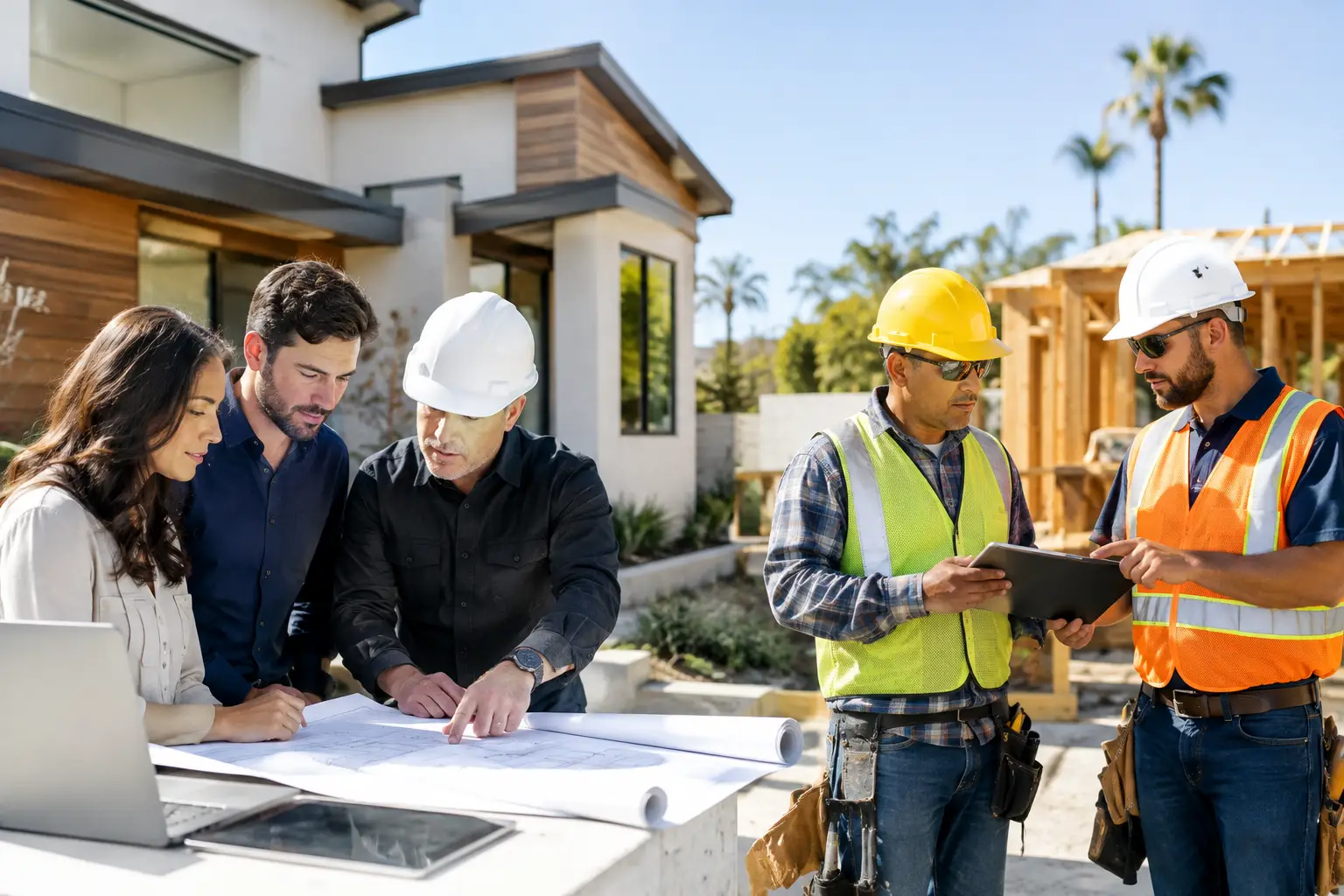
A design-build contractor manages both the design and construction sides of a project under one coordinated team or agreement. The contractor works with designers, architects, engineers, and specialty consultants while also planning the field work, estimating costs, coordinating permits, and building the project. The client has a primary point of contact throughout the process.
With the traditional general contractor model, the owner typically hires an architect or designer first, develops the plans, and then brings those completed documents to one or more contractors for pricing and construction. The general contractor takes responsibility once construction begins, coordinating subcontractors, materials, site safety, inspections, and quality control based on the approved plans.
The distinction is not about whether a general contractor can solve problems or coordinate skilled trades. A capable general contractor does that every day. The difference is when the contractor becomes involved and whether the design and construction teams are working together from the start.
When Design-Build Makes Sense
Design-build is often a strong fit when the scope is still taking shape. Many homeowners know they need more living space but have not decided whether a garage conversion, detached ADU, second-story addition, or reconfigured floor plan makes the most sense for their property. Early contractor input can help connect the vision to practical site conditions and construction requirements before the design is too far along.
This approach can be especially useful for projects with several interdependent systems. An ADU may involve utility planning, foundation work, framing, roofing, plumbing, electrical, HVAC, insulation, finishes, and local agency reviews. A major remodel may uncover structural limitations or require careful sequencing to keep part of the home functional. When the construction team contributes during planning, it can flag access constraints, long-lead materials, likely field challenges, and budget impacts while decisions are still easier to adjust.
A design-build process also reduces the burden on the owner to carry information between separate parties. Rather than asking an architect, engineer, permit expediter, and contractor to coordinate through multiple channels, the owner works with one construction-led team responsible for keeping the work aligned. That does not eliminate decisions or changes, but it creates a clearer path for addressing them.
There are trade-offs. Design-build is not usually a bid-shopping exercise with several contractors pricing identical, complete drawings. The value comes from coordination, early planning, and team accountability, not simply comparing the lowest number on paper. Owners should still ask detailed questions about scope, allowances, design responsibilities, communication, change management, and how project costs will be documented.
Benefits of Early Construction Input
Construction input during design can improve decision-making in practical ways. A proposed layout may look efficient until the team reviews existing utilities, drainage, roof connections, structural loads, or site access. A finish selection may fit the visual concept but affect procurement timing or installation requirements. Addressing these issues during planning is generally more manageable than discovering them after permits are issued and work has begun.
Early coordination can also help create a more realistic construction sequence. The team can consider demolition, temporary protection, inspections, utility work, framing, rough mechanicals, drywall, finishes, and final closeout as one connected process. That level of planning matters on occupied homes, tight urban sites, and commercial spaces where downtime can affect operations.
When a General Contractor Is the Better Choice
Hiring a general contractor after design is complete can be an excellent route for an owner who already has well-developed plans and wants a separate construction partner. This method may fit a custom home, large addition, or commercial tenant improvement where the owner has an established architect, a preferred design team, or drawings prepared to a detailed level.
The general contractor reviews the documents, develops pricing, identifies questions or gaps, builds the schedule, and manages construction. During the work, the contractor remains responsible for directing subcontractors, maintaining site safety, ordering materials, coordinating inspections, protecting completed work, and delivering the agreed scope with quality workmanship.
The traditional route can provide a clearer opportunity to compare contractor proposals, provided the plans and specifications are sufficiently complete. If every bidder receives the same information, the owner can better evaluate differences in scope, assumptions, schedule, experience, and pricing. A low proposal still deserves careful review. It may exclude important work, carry unrealistic allowances, or rely on assumptions that create change orders later.
The potential challenge is coordination between the completed design and real-world construction. Even high-quality plans can require clarification once walls are opened, existing conditions are verified, or agency comments are received. When designer and builder are under separate contracts, the owner may need to help manage communication and decision-making among the parties. Strong professionals can work effectively this way, but the process requires responsive collaboration.
Compare the Right Factors, Not Just the Price
The better question is not simply, “Which option costs less?” It is, “Which approach gives this project the clearest plan and strongest control?” A low initial design or construction figure can change quickly if the scope is incomplete, selections remain undecided, or site conditions have not been evaluated carefully.
Start by considering how complete your project is. If you have a finished set of plans, engineering, defined materials, and a clear scope, a general contractor may be ready to price and build the work. If you have goals, a budget range, and a property but need help turning those pieces into a buildable plan, design-build may provide more value.
Next, consider complexity. Straightforward projects with limited structural, mechanical, or permitting coordination may work well through a conventional design-then-build path. Projects involving multiple trades, major structural work, additions, ADUs, or phased construction benefit from early coordination because each decision can affect the next.
Also consider your desired level of involvement. Some owners prefer to lead the design relationship separately and select a contractor later. Others want one accountable partner to organize consultants, track decisions, coordinate construction, and provide consistent updates. Both are legitimate preferences. The key is choosing a process that matches your capacity and expectations.
Questions to Ask Before You Sign
Whether you choose design-build or a general contractor, ask how the team handles the full project cycle. You should understand who is responsible for plans and engineering coordination, who communicates with the permitting agency, how site conditions are evaluated, and how inspections are scheduled.
Ask how the proposed scope is documented and what is included in the price. Discuss allowances, owner selections, material lead times, and the procedure for changes. A professional contractor should explain how unexpected conditions, agency requirements, or requested upgrades are identified, priced, approved, and added to the schedule.
It is equally important to ask about field management. Who will supervise the job? How will the site be protected and kept safe? How often will you receive updates? How are workmanship concerns handled before closeout? Clear answers at the beginning build the foundation for a better working relationship later.
For projects in Los Angeles and Orange County, local experience matters because jurisdictional processes, property conditions, and utility requirements can vary. A contractor should never promise a permit approval date or assume every site will perform the same way. What they can provide is a disciplined planning process, responsive communication, and the experience to address issues before they become larger disruptions.
Choose the Delivery Method That Supports the Build
Design-build is often best when you need a construction partner to help shape the project from the beginning. A general contractor may be the right fit when your plans are complete and you are ready for a dedicated team to execute them with discipline. In either case, the strongest choice is a licensed, experienced contractor that defines the work clearly, communicates consistently, and takes responsibility for quality from site preparation to final completion.
At RD Fast Construction, that responsibility means treating every addition, ADU, remodel, roof replacement, and commercial project as a coordinated operation – not a collection of disconnected tasks. The right delivery method should make your next decision clearer and move your property forward with confidence.