
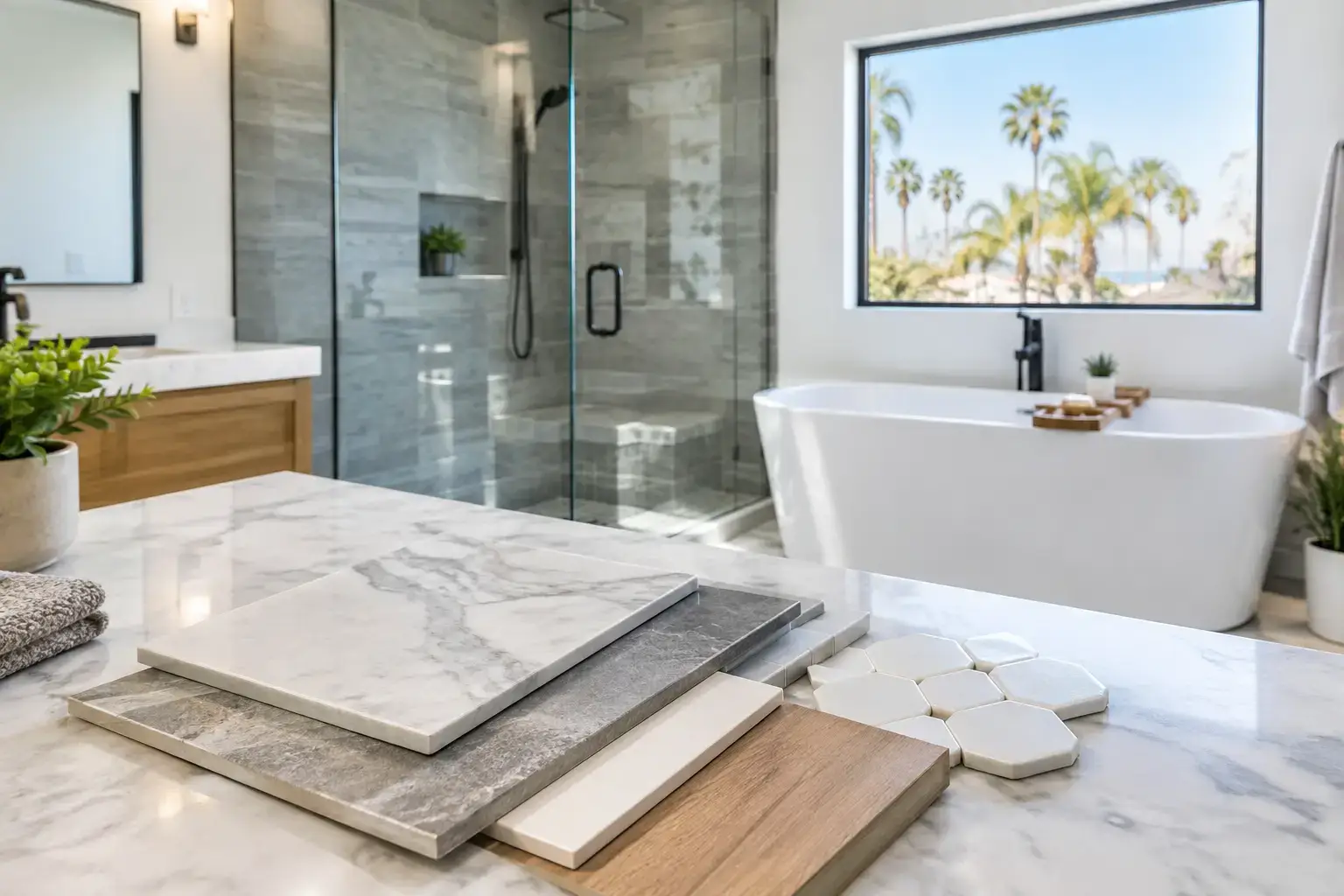
A bathroom can look finished on installation day and still fail early if the materials do not match the room’s moisture, traffic, and maintenance demands. The best bathroom materials are not simply the most expensive options or the trendiest finishes. They are the materials that work together: a properly prepared waterproofed shower, a stable floor assembly, durable surfaces, reliable fixtures, and cabinetry built for humid conditions.
For homeowners planning a major renovation, room addition, garage conversion, or ADU in Los Angeles or Orange County, material choices should be made early. They affect the design, construction sequence, long-term performance, and overall scope of work. A qualified contractor can help turn a collection of samples into a bathroom system that is attractive, practical, and built to last.
What Makes the Best Bathroom Materials?
Bathrooms place unusual demands on finishes. Floors deal with water, steam, dropped products, and regular cleaning. Shower walls experience constant moisture exposure. Countertops face cosmetics, soap, and heat tools. Cabinet boxes must stand up to repeated changes in temperature and humidity.
The strongest selections balance five factors: water resistance, durability, maintenance requirements, safety underfoot, and visual fit with the rest of the property. Budget matters as well, but choosing a lower-cost finish without accounting for its installation requirements can create unnecessary replacement costs later.
Material performance also depends on what is behind the visible surface. Tile alone is not a waterproofing system. Stone is only as stable as the substrate below it. A quality vanity top cannot protect a poorly constructed cabinet box from persistent moisture. This is why bathroom remodeling should be approached as coordinated construction work, not a series of separate finish selections.
Best Bathroom Materials by Surface
Porcelain Tile for Floors and Shower Areas
Porcelain tile is one of the most dependable choices for bathroom floors, shower walls, and shower floors when the tile format and surface finish are selected appropriately. It is dense, water-resistant, available in a wide range of colors and patterns, and easier to maintain than many natural materials. Modern porcelain can realistically resemble stone, concrete, wood, or handmade tile while offering more consistent performance.
For bathroom floors, a matte or textured porcelain finish typically provides better traction than highly polished tile. In shower areas, smaller mosaic tiles are often practical for the floor because additional grout lines can improve footing and allow the installation to follow the required slope toward the drain.
Large-format porcelain creates a clean, contemporary look with fewer grout lines. However, it requires a very flat substrate and careful layout. Large tiles are not automatically better. In a compact bath, the wrong tile dimensions can create awkward cuts or make proper drainage more challenging in a shower.
Natural Stone for Character, With Real Maintenance Expectations
Marble, travertine, limestone, slate, and granite bring natural variation that manufactured materials cannot fully replicate. They can be excellent choices for vanity tops, feature walls, flooring, or carefully planned shower applications. The trade-off is maintenance.
Many stones are porous and may require sealing, gentle cleaning products, and periodic attention to preserve their appearance. Softer stones can scratch, etch, or show water marks more readily than porcelain. Marble, for example, can be a beautiful choice in a primary bathroom, but it is not ideal for every household or every high-use shower.
Natural stone works best when the owner understands the patina it may develop over time. If the goal is a nearly maintenance-free surface with a consistent appearance, porcelain that mimics stone is often the better operational choice.
Quartz for Vanity Countertops
Engineered quartz is a leading countertop material for bathroom vanities because it is nonporous, durable, and available in a broad selection of colors and patterns. It generally handles water, cosmetics, and daily use well without the regular sealing associated with many natural stone surfaces.
Quartz is especially effective in busy family bathrooms and ADU bathrooms, where easy upkeep is often a priority. It provides a refined finish without requiring the owner to treat the vanity as a delicate surface. As with any countertop, careful fabrication around sinks, faucets, and backsplash transitions is critical to a clean final result.
Quartz does have limitations. It should not be treated as a direct replacement for tile in wet shower enclosures, and extremely high heat can damage some products. For a bathroom vanity, though, it is usually one of the most practical long-term investments.
Solid-Surface Materials for Integrated Sinks
Solid-surface countertops offer a smooth, modern appearance and can be formed with integrated sinks. Because the basin and top can be joined without a visible seam, cleanup is simple and the design feels streamlined. These materials can be repaired in some cases if they are scratched or lightly damaged.
They are a strong option for contemporary bathrooms, rental-ready spaces, and commercial restroom environments where simple maintenance is a priority. Their look is generally more uniform than natural stone, which may be an advantage or a limitation depending on the design direction.
Moisture-Resistant Wall Finishes Outside the Shower
Painted drywall can perform well in areas outside the shower when the proper moisture-resistant assemblies, surface preparation, ventilation strategy, and paint products are used. It is a flexible choice for ceilings and non-wet walls, allowing for color changes and lower material costs than full-height tile.
Within a shower or other direct-wet area, wall finishes require a purpose-built waterproofing approach beneath the final tile or panel surface. Large-format porcelain slabs, ceramic or porcelain tile, and certain approved wall panel systems can all be effective, but the assembly details matter more than the showroom sample. Corners, penetrations, niches, benches, and transitions are the locations that demand the most disciplined workmanship.
Cabinetry That Can Handle Bathroom Humidity
The vanity is often the hardest-working piece in the room. It stores products, supports the countertop and sink, and sits close to water sources. Standard particleboard cabinet boxes may be vulnerable when water reaches exposed edges or damaged laminate surfaces.
For a lasting remodel, look for quality plywood construction, moisture-resistant engineered panels, durable edge banding, and properly sealed finishes. A floating vanity can make a smaller bathroom feel more open and simplifies floor cleaning, while a full-height vanity provides more storage and can hide plumbing connections. The right choice depends on the room layout, household needs, and desired accessibility.
Wood veneer and painted cabinetry can both work well. Painted finishes offer broad color flexibility, while wood veneer brings warmth and natural grain. In either case, reliable hardware and careful installation are as important as the door style. Soft-close hinges and drawer slides are worthwhile when they are from proven manufacturers and properly adjusted at closeout.
Fixtures and Metals: Choose Reliability Before Finish
Faucets, shower valves, drains, and toilet components are not the place to prioritize appearance alone. A beautiful fixture becomes a costly inconvenience if replacement parts are difficult to source or if the internal components do not hold up under regular use.
Choose fixtures from established manufacturers with accessible service parts and compatible trim options. For showers, the rough-in valve must be coordinated with the final trim before walls are closed. This small planning step prevents delays and avoids mismatched components later.
Finish selection should fit the level of daily use. Polished chrome remains a practical, widely available choice that coordinates easily with other hardware. Brushed nickel and brushed brass can hide fingerprints better than highly reflective finishes. Matte black creates contrast but may show mineral spotting in areas with hard water. There is no universal best finish, only the finish that suits the maintenance expectations and overall design.
Do Not Overlook Grout, Caulk, and Waterproofing
A bathroom’s long-term durability is often decided in places most visitors never notice. Grout choice, movement joints, sealants, drain connections, substrate preparation, and waterproofing continuity all influence whether the finished room performs as intended.
Cement-based grout remains common and can be a good fit for many tile projects. High-performance grout options may offer improved stain resistance and reduced maintenance, though they can add cost and require installers to follow specific handling procedures. Color matters too. A very light grout can brighten a room but may show stains sooner, while a medium or darker shade often provides a more forgiving finish.
Flexible sealant belongs where different materials meet or where movement is expected, such as wall-to-floor transitions and certain corners. It should complement the grout rather than be treated as an afterthought. Behind these visible details, a continuous waterproofing system and correct drain integration are essential to a professional shower installation.
Make Material Decisions as One Coordinated Plan
The most successful bathrooms do not rely on one showpiece material. They coordinate floor tile with shower tile, countertop with cabinetry, fixture finish with lighting, and wall assemblies with ventilation and plumbing locations. Before finalizing selections, review full-size samples under the room’s planned lighting and consider how surfaces will look wet, dry, and after regular use.
At RD Fast Construction, bathroom material planning is handled as part of the larger construction scope, with attention to layout, plumbing, electrical, ventilation, finish coordination, and inspection requirements. That approach helps clients make confident choices before construction reaches the point where changes become more disruptive.
A well-built bathroom should still feel considered years after completion. Choose materials that support how the room will actually be used, invest in the assemblies behind the finishes, and let experienced construction planning protect the details that make a remodel last.