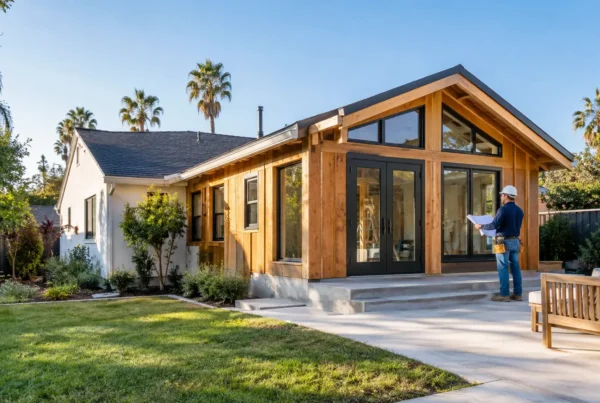

A roof nearing the end of its service life, a garage with ADU potential, or a growing family that has outgrown the floor plan can make waiting feel impractical. Knowing how to finance home renovation work starts before applying for funding. It starts with a clearly defined scope, a realistic construction budget, and an understanding of what the project needs to accomplish for your household or property.
For Los Angeles and Orange County owners, major construction often involves more than finishes. Plans, engineering coordination, permits, inspections, structural work, plumbing, electrical, and HVAC can all affect the final investment. A strong financing decision supports the full project, not just the most visible portion of it.
Start With a Construction-Ready Budget
Financing is easier to evaluate when the project is specific. “We want a larger kitchen” is a starting point. “We are adding 350 square feet, relocating plumbing, upgrading the electrical panel, and completing required permits and inspections” is a scope that can be priced and financed responsibly.
Before comparing loan products, work with a qualified general contractor to establish the major components of the job. For an addition, ADU, garage conversion, or major remodel, that typically includes preconstruction planning, design and engineering coordination, permitting, site preparation, labor, materials, inspections, and final finishes. Roof replacement and structural renovation projects also require careful attention to access, existing conditions, and code-related requirements.
A professional estimate should help separate known costs from allowances or items that still need selection. It should also explain how construction payments are structured. This gives you a more accurate number to bring to a lender and helps prevent a common problem: securing enough money for demolition and framing, but not enough to complete the project properly.
It is wise to include a contingency reserve. Renovations can reveal hidden conditions after walls, roofing, or slabs are opened. The appropriate amount depends on the age and condition of the property, the complexity of the work, and how much of the existing structure will be affected. Your contractor and financial professional can help you think through that risk without treating any budget as a guarantee.
How to Finance Home Renovation Projects: Main Options
The right funding path depends on your equity, income, credit profile, cash reserves, desired monthly payment, and the project timeline. Interest rates, fees, underwriting standards, and availability change, so compare current terms with a qualified lender before making a commitment.
Cash Savings
Paying from savings can keep the project simple and avoids interest charges. It may fit a defined roof replacement, a focused renovation, or an owner who has set aside capital specifically for property improvements.
The trade-off is liquidity. Major construction should not leave a household without emergency reserves or the ability to address unexpected property needs. If using cash means reducing the scope, that may be reasonable. It is usually better to complete a well-planned phase than to begin a larger project without adequate funds for the full scope.
Home Equity Loan
A home equity loan generally provides a lump sum that is repaid over a set term. Predictable payments can be useful when the construction scope and contract amount are well defined, such as a room addition, major renovation, or roof replacement with a detailed estimate.
Because the loan is secured by the home, the decision deserves careful review. Confirm whether the loan amount covers the construction budget, potential contingency, lender fees, and the timing of contractor payment milestones. Ask how the new payment works alongside your existing mortgage rather than evaluating the loan in isolation.
HELOC
A home equity line of credit, often called a HELOC, may offer more flexibility because funds can be drawn as needed up to an approved limit. This can align with phased construction payments, especially when permitting, engineering, or selections affect the schedule.
Flexibility has a cost. HELOC rates are commonly variable, and monthly payments can change. Read the draw period and repayment terms carefully. A line of credit can be useful for a project with moving parts, but it should still be paired with a disciplined budget and a clear understanding of the total amount you intend to use.
Cash-Out Refinance
A cash-out refinance replaces an existing mortgage with a new, larger mortgage and provides cash for the project. For some owners, it can create a simpler single-payment structure.
Whether it makes sense depends heavily on the terms of the mortgage you already have. Replacing a favorable existing rate may outweigh the convenience of accessing equity. Closing costs, the loan term, and the total interest paid over time all deserve review with a lending professional.
Renovation or Construction Loans
Some lenders offer loans designed for renovation or construction work. Depending on the product, funds may be released in draws as project stages are completed and verified. This structure can be particularly relevant for substantial additions, ADUs, garage conversions, or whole-home remodeling.
These loans may involve more documentation and coordination than a conventional personal loan or equity product. Lenders may request plans, contractor information, budgets, appraisals, and a draw schedule. That additional process can be worthwhile when the project is complex, but homeowners should understand the lender’s requirements before construction begins.
Personal Loans and Other Unsecured Funding
Unsecured personal loans do not use the property as collateral and can close faster in some situations. They may be considered for smaller, clearly scoped professional projects or for a portion of a larger budget.
However, rates and repayment periods may be less favorable than secured financing, particularly for large construction costs. Credit cards and short-term promotional offers may look convenient, but they can become expensive if the balance is not repaid before terms change. For major residential work, short-term debt should be evaluated with extra caution.
Match the Funding Structure to the Build
Construction is not a single transaction. Work happens in stages: planning, permits, site preparation, foundations, framing, rough mechanical work, finishes, inspections, and closeout. Your funding should support that sequence.
Ask your contractor how payments are tied to completed milestones and what documentation is provided along the way. A dependable contractor should be able to explain the scope, schedule, selections that affect cost, and the point at which owner decisions are needed. This helps you avoid funding delays that can interrupt materials, inspections, or trade scheduling.
For an ADU or garage conversion, also consider the full path to completion. The budget may include design and engineering, utility considerations, permits, construction, and final inspections. For a home addition, structural integration and mechanical upgrades can be significant. For roofing, the condition of the decking or underlying structure may affect the final scope once work begins. Financing should reflect the real project, not only a preliminary headline price.
Questions to Settle Before Signing
Before choosing a loan or authorizing construction, get clear answers to several practical questions. What is the complete anticipated project cost, including permits, design coordination, and a reasonable contingency? How and when will contractor payments be due? Which selections are included, and which are allowances? What happens if site conditions require additional work? How will the proposed monthly payment fit your broader household budget?
Also confirm who is responsible for coordinating plans, permits, inspections, and required trade work. A design-build contractor can bring these moving pieces into one managed process, helping owners make decisions with better visibility. At RD Fast Construction, the goal is to provide that clarity from early planning through final completion, so clients can move forward with confidence rather than assumptions.
Avoid Financing the Wrong Scope
The least expensive quote is not always the most financeable project. A low initial number may exclude work that is necessary for safety, code compliance, proper installation, or completion. When comparing proposals, make sure each contractor is pricing a comparable scope. Differences in permits, structural work, electrical upgrades, material quality, and project management can change the number substantially.
Be cautious about committing to work based only on an online estimate or a verbal description. Major renovation financing should be supported by written project information and a contract that identifies the work, payment schedule, change-order process, and responsibilities. This is not paperwork for its own sake. It protects the momentum of the build when decisions need to be made quickly.
A well-financed renovation gives your project room to be built right. Take the time to define the scope, compare funding based on total cost rather than monthly payment alone, and choose a construction team prepared to manage the work with care from the first plan to final inspection.