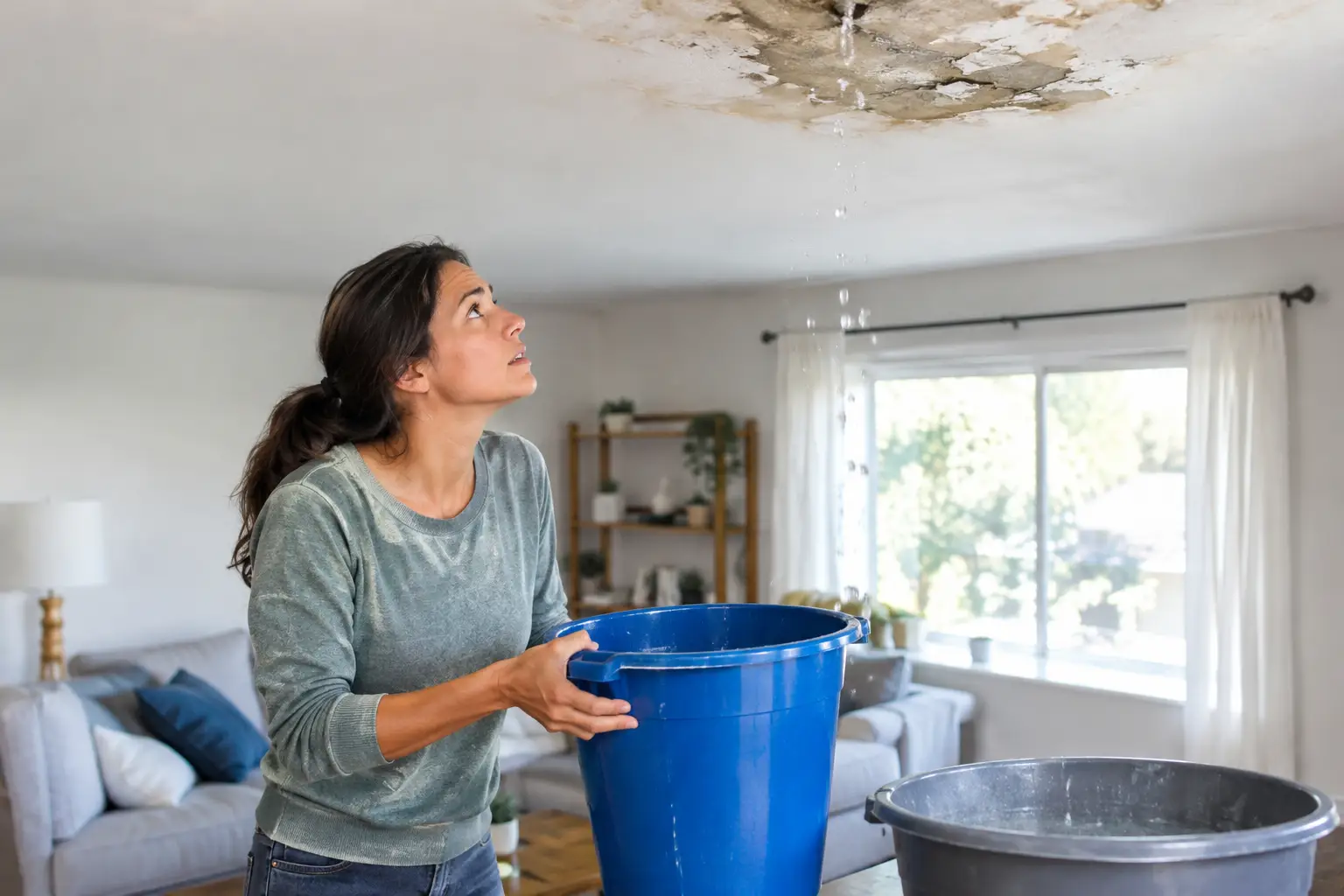
A ceiling stain can look minor at breakfast and become a wet, sagging section of drywall by nightfall. When water enters through a roof, the visible drip is often only part of the problem. Moisture can travel along framing, insulation, wiring paths, and ceiling surfaces before it appears inside. Knowing what to do when a roof leak damages your home helps you protect people first, limit avoidable damage, and move toward a repair that addresses the real source of the water.
Put safety ahead of the leak
Do not stand beneath a ceiling that is bulging, cracked, or actively sagging. A water-loaded ceiling can fail without much warning. Keep family members, pets, furniture, and valuables out of the affected area, especially if the leak is close to lighting fixtures, outlets, or electrical panels.
If water is coming through a light fixture or you suspect electrical involvement, avoid touching the fixture, switch, or wet drywall. If it is safe to do so, shut off power to the affected area at the electrical panel. When there is any doubt about electrical safety, contact a qualified professional rather than taking chances.
Place containers under active drips where this can be done safely, and move belongings away from the water path. This is damage containment, not a roof repair. Avoid climbing onto a wet roof, using ladders during a storm, or attempting a patch from the exterior. In Southern California, a sudden heavy rain can make even a low-slope roof hazardous, while wind can make temporary materials unreliable.
Document the damage before cleanup changes the picture
Once the immediate area is safe, take clear photos and video of the leak, ceiling stains, damaged flooring, wet belongings, and exterior conditions visible from the ground. Capture wide shots that show where the damage is located, then close-ups of the affected materials. Note the date, time, weather conditions, and whether the leak began during rainfall or after it stopped.
This record can be useful when speaking with your insurance carrier and with the roofing or construction team evaluating the home. It also establishes a baseline. Some water damage becomes more apparent after materials begin drying, and a detailed record makes it easier to track what changed.
Do not discard damaged materials or begin major demolition until you have documented them and received direction from the appropriate parties. At the same time, do not delay necessary emergency stabilization simply because documentation is incomplete. Protecting the property and preventing further damage should remain the priority.
Call the right professionals in the right order
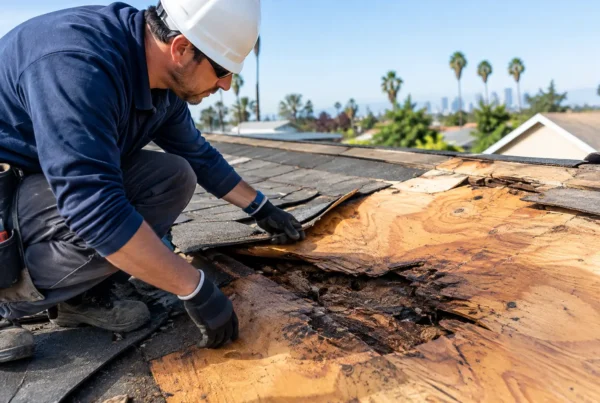
A roof leak requires more than someone covering the visible stain. The key question is not just where water appeared indoors, but where it entered the roofing system and how far it traveled. A professional roof inspection should evaluate likely entry points such as damaged shingles or tiles, worn underlayment, flashing failures, roof penetrations, valleys, skylights, chimneys, vents, and drainage transitions.
If the leak has damaged ceilings, walls, insulation, flooring, or electrical components, the scope may extend beyond roofing. That is where a licensed general contractor can help coordinate the work as one connected project: roofing correction, moisture assessment, removal of compromised materials when necessary, structural review if there are signs of deterioration, and proper reconstruction of interior finishes.
For homeowners in Los Angeles and Orange County, this coordination matters. Homes often have additions, altered rooflines, solar penetrations, low-slope sections, or older construction details that can make the source of a leak less obvious. A focused inspection helps prevent the common mistake of repairing the visible interior damage while leaving the exterior failure unresolved.
What to do when a roof leak damages your home: identify the full scope
A drip does not always mean a small repair, and a large ceiling stain does not always mean the whole roof must be replaced. The correct solution depends on the age and condition of the roof, the source of the leak, the duration of moisture exposure, and the condition of the materials beneath the roof covering.
A qualified evaluation may find a localized issue that can be repaired without major roof work. In other cases, repeated leaks, widespread underlayment failure, brittle roofing materials, or water damage in several locations can point toward a more extensive roof replacement. The goal is to make a decision based on the roof system’s actual condition, not on guesswork or the fastest-looking fix.
Interior materials require the same discipline. Drywall can sometimes be preserved if moisture exposure was limited and drying is verified. But swollen drywall, deteriorated insulation, stained framing, softened wood, or persistent moisture may require removal and replacement. Wet materials trapped behind finished surfaces can create longer-term problems, so a professional should assess what is dry, what is damaged, and what needs controlled remediation.
Contact your insurance carrier with clear information
Notify your homeowners insurance carrier promptly if the damage appears significant or if you plan to make a claim. Provide the documentation you collected, describe the active conditions, and ask what information they need from you. Keep notes of claim numbers, adjuster contacts, dates, and conversations.
Coverage depends on your specific policy, the cause of the leak, maintenance history, deductibles, and other details. A contractor can document observed construction conditions and provide a repair scope, but they should not promise coverage or interpret policy language for you. Keep the repair discussion centered on the work needed to restore the roof and affected areas correctly.
It is also wise to ask the contractor for a clear written scope. It should distinguish emergency protection, roof repairs or replacement, interior restoration, and any additional conditions found after controlled removal of damaged materials. Water damage sometimes reveals hidden deterioration, so transparency about potential change conditions protects everyone involved.
Avoid shortcuts that create a second problem
When rain has entered the house, speed matters. So does workmanship. A rushed cosmetic repair can conceal wet materials, and a roof patch installed without identifying the entry point can send water into a different part of the assembly during the next storm.
Be cautious about proposals that focus only on a quick exterior cover or only on repainting the ceiling. The roof, underlayment, flashing, ventilation, drainage, framing, insulation, drywall, and electrical conditions may all need consideration depending on the leak. Not every project needs every service, but every repair should be based on a complete inspection.
Ask practical questions before authorizing work: What caused the leak? What evidence supports that finding? Which materials are damaged? How will the area be protected while work is scheduled? What inspections or approvals may apply to the scope? Who is responsible for coordinating the roofing and interior restoration? Clear answers are a sign that the contractor has a plan beyond the immediate emergency.
Plan the repair around your home, not just the storm
Once the home is stabilized, a well-managed project should move from diagnosis to a defined scope, material selection, scheduling, and quality control. If roof replacement is warranted, this is also an opportunity to consider how the new system will work with existing penetrations, drainage paths, additions, and future construction plans. A roof should protect the home as a complete system, not simply cover it.
RD Fast Construction approaches water-damage repairs with that wider view. The work may involve a focused roof repair, a replacement roof, or coordinated reconstruction when moisture has affected more than the exterior covering. The priority is to identify the cause, protect the property, and complete the restoration with accountable workmanship.
A roof leak is stressful because it interrupts daily life and raises questions you cannot answer from a ceiling stain alone. Take the situation seriously, avoid unsafe shortcuts, and bring in qualified professionals early. A prompt, well-coordinated response gives your home the best chance of being restored properly before a manageable leak becomes a larger construction issue.