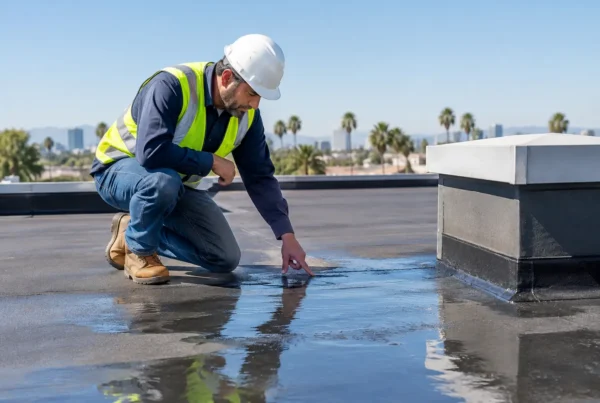
A roof rarely fails without giving a homeowner warning first. The signs your asphalt shingle roof needs replacement often begin at the edges, around penetrations, or in the attic – places that can be easy to miss until moisture reaches the interior. Acting early helps protect the framing, insulation, ceilings, and finishes beneath your roof while giving you time to make a sound construction decision.
Asphalt shingles remain a practical, widely used roofing choice for Southern California homes. Still, sun exposure, heat cycles, wind, installation quality, ventilation, and the roof’s age all affect how long they perform. A professional roof evaluation can identify whether a targeted repair is still appropriate or whether replacement is the responsible next step.
1. Your Roof Is Near or Beyond Its Expected Service Life
Age alone does not automatically mean a roof must be replaced, but it is an important starting point. Many asphalt shingle roofs perform for roughly 20 to 30 years, depending on the shingle grade, installation conditions, slope, maintenance history, and local exposure. Lower-quality shingles or roofs exposed to prolonged heat may show wear sooner.
If you do not know when the roof was installed, look for permit records, prior inspection reports, or paperwork from a previous owner. A roofing contractor can also assess the materials and wear patterns to provide a more informed estimate of remaining service life.
An older roof with no visible leaks may still be serviceable. However, once age is paired with brittle shingles, repeated leaks, or widespread granule loss, postponing replacement can create a larger and more expensive scope of work.
2. Shingles Are Curling, Cracking, or Losing Their Shape
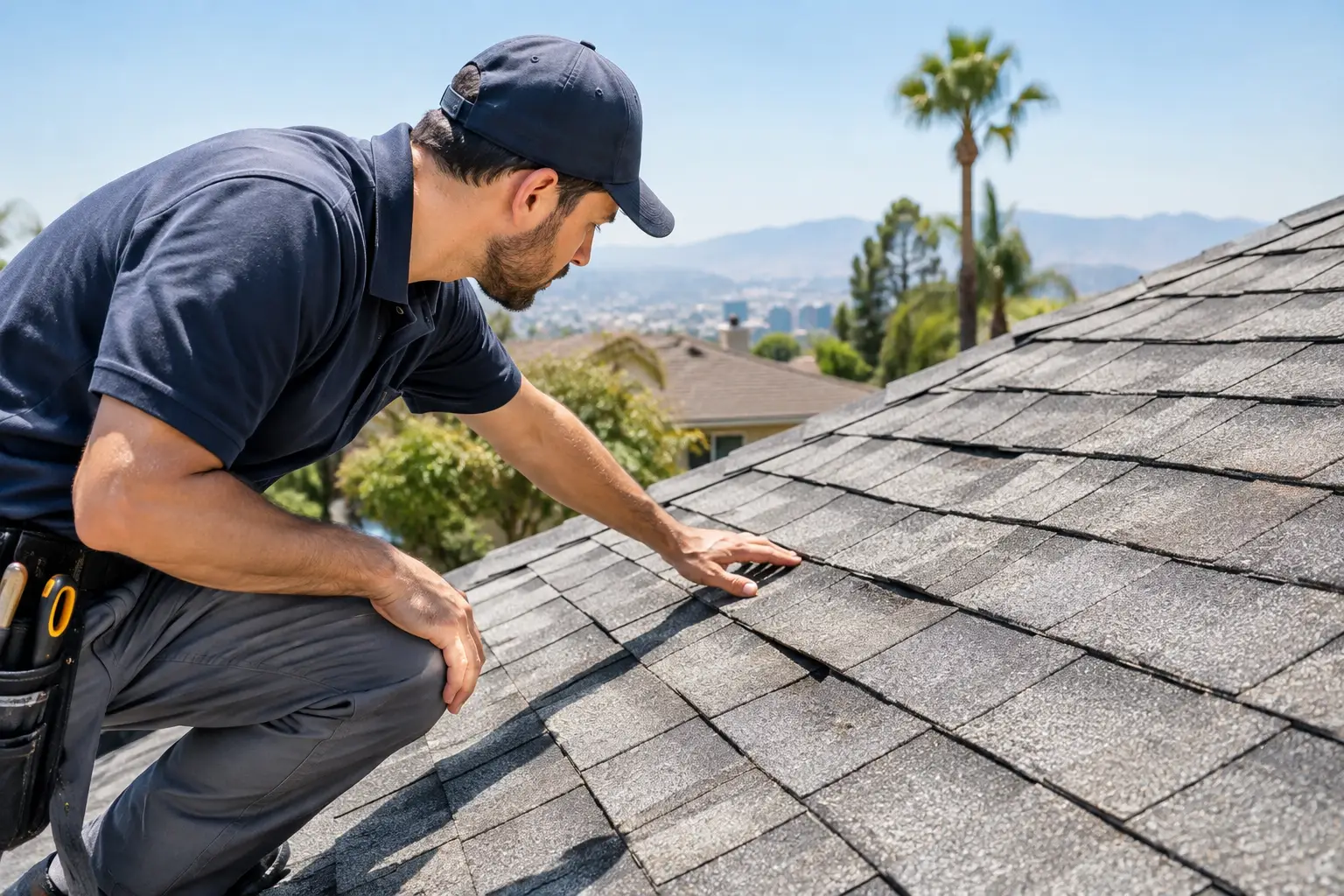
Healthy asphalt shingles should lie flat and overlap consistently. Curling corners, lifted edges, cupping, cracking, or a visibly uneven surface indicate that shingles are losing their ability to shed water reliably.
Heat is a major factor in Los Angeles and Orange County. Years of direct UV exposure can dry asphalt components, reduce flexibility, and make shingles more vulnerable to wind and thermal movement. A few isolated damaged shingles may not mean the entire roof has failed. Widespread distortion across several roof planes is different – it often signals that the roofing system is nearing the end of its useful life.
Do not judge the roof only from ground level. Damage near ridges, valleys, chimneys, skylights, and wall transitions can be harder to see, yet these are among the areas most likely to develop water intrusion.
3. Granules Are Collecting in Gutters or at Downspouts
The granular surface on an asphalt shingle is not just cosmetic. It helps shield the asphalt layer from sunlight and weather exposure. Over time, some granule loss is normal. Heavy or accelerating loss is a concern, particularly when gutters contain a noticeable buildup or shingles show dark, exposed-looking patches.
Granule loss can occur as shingles age, but it may also point to storm damage, foot traffic, manufacturing concerns, or premature deterioration. A roof inspection should consider the condition of the whole surface rather than relying on one sign alone.
In many cases, a roof that is shedding granules also has other age-related issues, such as weak seals, cracks, and reduced water resistance. That combination is a strong reason to evaluate replacement before the underlayment and roof deck are put at risk.
4. Missing Shingles Keep Appearing After Wind or Weather Events
A missing shingle leaves the roof assembly exposed to water and wind-driven debris. One missing shingle may be repairable if the surrounding roofing is in good condition and compatible replacement materials are available. Repeated loss across the roof is more serious.
When shingles blow off more than once, the cause may be worn seal strips, brittle materials, insufficient fastening, or a broader installation issue. Simply replacing a few pieces without assessing why they failed can leave the underlying problem unresolved.
Color matching can also be difficult on an older roof because existing shingles fade over time. This does not always require full replacement, but it is one more practical consideration when deciding whether continued repairs are worthwhile.
5. Water Stains, Attic Moisture, or Active Leaks Are Showing Up
A ceiling stain may appear far from the actual roof opening. Water can travel along roof framing, underlayment, or electrical and plumbing penetrations before it becomes visible indoors. That is why a leak should be investigated promptly, even if it only appears after a heavy rain.
Check for brown ceiling marks, peeling paint near exterior walls, damp insulation, musty attic odors, or visible moisture on framing. These conditions can stem from roofing failure, flashing issues, ventilation problems, or other building-envelope concerns. A qualified contractor should trace the source instead of assuming the nearest damaged shingle is the cause.
An isolated flashing failure can sometimes be addressed without replacing the roof. Multiple leaks, recurring stains, or moisture combined with an aging shingle field often point toward a larger replacement need.
6. The Roof Deck Looks Sagged, Soft, or Uneven
A straight roof plane should generally look straight. Dips, waves, low spots, or noticeable sagging can indicate problems below the shingles, including deteriorated sheathing or moisture damage. This is not a cosmetic issue to ignore.
Soft areas underfoot should never be treated as a casual maintenance concern. They may indicate that water has compromised the roof deck and potentially affected structural components. A professional evaluation can determine the extent of the issue and whether replacement should include deck repairs, improved flashing, or ventilation updates.
7. Flashing and Roof Transitions Are Failing
Roofing is a system, not just a layer of shingles. Flashing around chimneys, vents, skylights, walls, valleys, and other transitions directs water away from vulnerable openings. Rusted metal, separated flashing, cracked sealant, or damaged materials around these areas can cause leaks even when the main shingle field looks acceptable.
On an aging roof, flashing failures may be a sign that individual repairs are becoming less effective. During a full roof replacement, these critical transition details can be rebuilt as part of a coordinated system rather than patched around worn materials.
When Repair May Be Enough – and When Replacement Makes More Sense
The right decision depends on the condition of the complete roof assembly. A relatively new roof with limited, localized damage may benefit from a professional repair. Replacement is generally the stronger long-term option when shingles are worn across broad areas, leaks recur, materials are brittle, the deck is compromised, or the roof has reached its expected age range.
A thorough assessment should examine shingles, underlayment, flashing, penetrations, drainage paths, ventilation, and accessible roof decking. It should also account for upcoming construction plans. If you are planning an ADU, room addition, major remodel, or solar installation, coordinating roofing work before other major improvements can reduce disruptions and help protect the completed project.
Plan Replacement Before Water Damage Expands
Waiting for a roof to leak badly is rarely the best strategy. By then, the work may extend beyond shingles to include damaged sheathing, insulation, drywall, paint, or framing. Planning replacement while the scope is still controlled gives homeowners more flexibility in material selection, scheduling, and project coordination.
For property owners in Los Angeles and Orange County, RD Fast Construction provides professional roofing evaluations and replacement work as part of a complete construction approach. The goal is not to push a replacement before it is necessary. It is to identify the roof’s actual condition, explain the scope clearly, and complete the work with the attention to safety, workmanship, and property protection your home deserves.
If your roof is showing several of these warning signs, schedule a professional assessment before the next weather event turns manageable wear into interior damage.