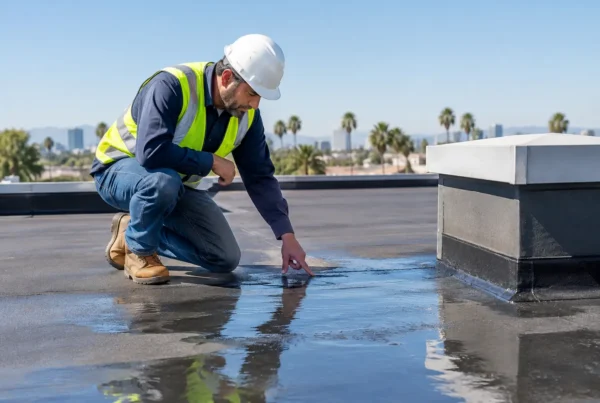
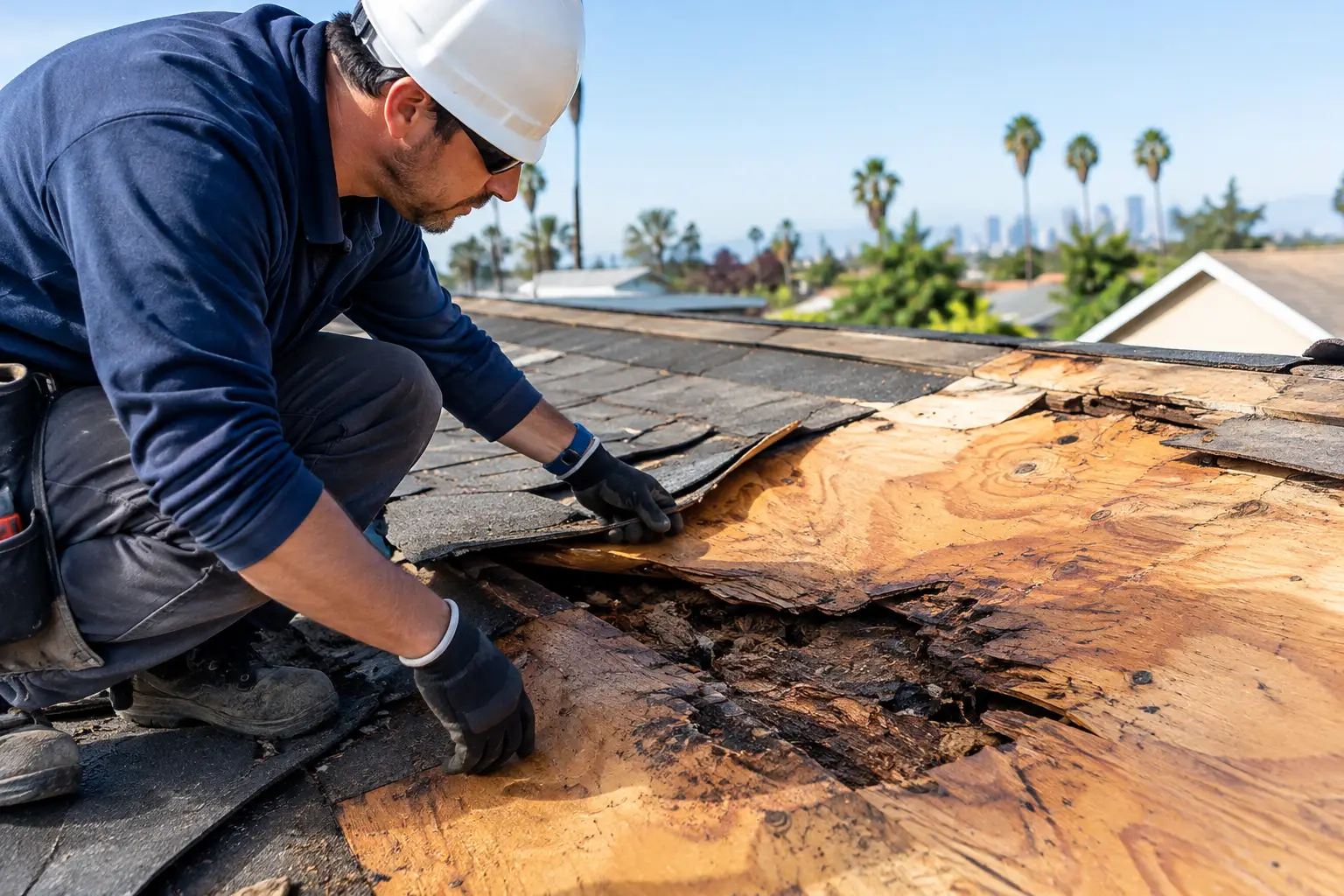
A roofing crew removes old shingles and finds soft, dark, or deteriorated wood underneath. At that point, homeowners naturally ask, what happens when damaged roof decking is discovered? The short answer is that the affected decking should be evaluated and replaced before the new roofing system is installed. Covering it with fresh underlayment and shingles may hide the problem temporarily, but it does not restore the roof’s strength or provide a reliable surface for the new materials.
Damaged roof decking is not always a sign that an entire roof structure has failed. In many cases, the issue is limited to areas affected by an old leak, poor ventilation, failed flashing, or water intrusion around penetrations. A professional contractor’s job is to determine the extent of the damage, identify its source, explain the options clearly, and complete the repair properly before moving forward.
What Happens When Damaged Roof Decking Is Discovered?
Roof decking, also called sheathing, is the layer of plywood or oriented strand board attached over the rafters or trusses. It creates the solid base that supports underlayment, flashing, and shingles or other roof-covering materials. When decking loses its integrity, the rest of the roof system cannot perform as intended.
Once exposed during a roof replacement, damaged areas are inspected to determine whether they are localized or widespread. The crew checks for softness underfoot, visible rot, delamination, staining, sagging, insect damage, and fasteners that no longer hold securely. The affected panels or sections are then removed and replaced with compatible new material before the roof is dried in and finished.
This can add work to the original scope, because concealed conditions are often impossible to confirm until the existing roof covering is removed. A responsible contractor documents the condition, discusses the repair requirement with the property owner, and updates the work plan before proceeding. That transparency matters because roof decking is not a cosmetic upgrade. It is a structural component of the roofing assembly.
Why Sound Decking Matters Before New Roofing Goes On
A new roof is only as dependable as the surface beneath it. Shingles, tile, metal panels, and underlayment need a stable, properly fastened substrate. If they are installed over compromised decking, fasteners can pull loose, roof lines can look uneven, and water protection details may not sit correctly.
Soft decking can also create a safety concern. Roof crews need a stable walking surface during installation, and a weakened area may not safely support weight. If moisture damage has traveled beyond the visible opening, it may affect nearby panels, framing connections, insulation, or the attic environment as well.
For homeowners, replacing damaged decking during the roofing project is usually more efficient than discovering the same problem after the new roof is complete. The roof is already opened, the crew and equipment are in place, and the repair can be integrated into the installation sequence. The exact impact on schedule and cost depends on the amount of damage, roof access, material availability, and whether additional moisture-related conditions are found.
Common Reasons Roof Decking Deteriorates
The most common cause is recurring water intrusion. A small leak around a pipe vent, chimney, skylight, valley, wall transition, or damaged flashing can saturate the decking over time. Water may travel along framing before it becomes visible on an interior ceiling, so the damaged wood is not always directly above the stain a homeowner noticed.
Poor attic ventilation can contribute to moisture buildup and excessive heat, particularly in older homes. Condensation can affect the underside of decking, while prolonged heat can accelerate wear on the roofing system above. In coastal and warmer Southern California conditions, roof assemblies still need balanced ventilation and properly detailed weather protection, even when severe winter weather is less frequent than in other regions.
Age, previous installation errors, pest activity, and storm-related damage can also play a role. The key is not to assume the cause. A proper assessment looks at the roof covering, flashing, attic conditions, drainage paths, and the condition of adjacent materials so the same issue is less likely to return.
How a Professional Roofing Contractor Handles the Repair
The first priority is protecting the building from weather. If the roof has been opened, the crew secures the work area and maintains temporary weather protection as needed. They then remove only the compromised decking and inspect the surrounding area for damage that may not be visible from above.
New decking is cut, installed, and fastened to provide a firm, consistent base. The contractor then restores the roofing layers in the correct order: decking, underlayment, flashing details, roof covering, and ventilation components where applicable. The work should blend into the larger roof system rather than function as an isolated patch hidden beneath new shingles.
Communication is just as important as the repair itself. Homeowners should receive a clear explanation of what was found, where it was found, why replacement is recommended, and how it affects the project scope. Photos can be useful when the condition is difficult to see safely from the ground. For larger replacement projects, a written change to the scope helps everyone stay aligned on the work being authorized.
At RD Fast Construction, roofing work is approached as part of the home’s overall building envelope, not simply a surface replacement. That means looking beyond the visible roof material and addressing the details that protect the structure underneath.
Can Damaged Decking Be Repaired Instead of Replaced?
It depends on the condition and location of the material. Minor surface staining does not always mean the decking has lost structural capacity. On the other hand, wood that is soft, rotted, delaminated, sagging, or unable to hold fasteners generally requires replacement. A contractor may also recommend replacing a full panel rather than cutting a very small section if doing so produces a cleaner, stronger, and more practical repair.
The trade-off is straightforward. Limiting replacement to only confirmed damaged areas can control the scope, but the inspection must be thorough enough to avoid leaving deteriorated material behind. Replacing more material than necessary is not responsible either. The right approach is based on actual site conditions, not assumptions or a one-size-fits-all allowance.
If damaged decking is connected to framing decay, ongoing leaks, or an attic moisture issue, the repair may need to expand beyond the sheathing itself. That does not automatically mean a major reconstruction is required, but it does mean the project should pause long enough to identify the proper correction. Moving too quickly can turn a manageable roofing repair into a recurring problem.
Questions to Ask When Decking Damage Is Found
When a contractor identifies damaged decking, ask to see the affected area or photos of it. Confirm whether the condition is localized, whether the likely moisture source has been identified, and whether adjacent framing or insulation needs further review. You should also ask how the replacement will be integrated with underlayment, flashing, and the new roof covering.
It is reasonable to ask how the discovery affects the schedule, material quantities, and price. Exact answers may take time if the full extent of the condition is still being uncovered, but you should receive a direct explanation of the process before extra work moves forward. Professional construction management means keeping the job organized even when hidden conditions change the original plan.
Do Not Put a New Roof Over a Weak Foundation
Finding damaged decking can feel like bad news in the middle of a roofing project, but discovering it before the new roof is installed is the right time to address it. The best next step is a careful assessment, a clearly defined repair scope, and workmanship that restores a sound base for the roofing system above. That is how a roof replacement protects more than curb appeal – it protects the home beneath it.